
-

Situation awareness & physical security: spotting risks early and acting accordingly
Situational awareness is one of the most effective – and often underestimated – protective measures in everyday life and at work. Those who remain attentive will recognize unusual situations early on: an open side door, a "passing visitor" at the turnstile or an unknown device in the meeting room. It is precisely these small moments that often determine whether suspicious activity is detected early - or a security incident occurs.
Learn more about what situational awareness really means, typical patterns that occur in cases of unauthorized access, and which clear rules and routines companies can establish to strengthen physical security reliably - without unnecessarily disrupting day-to-day work
The most important aspects

Situational awareness is a personal early warning system. Anyone who perceives, understands, anticipates and acts attentively minimizes risks in everyday life and work.
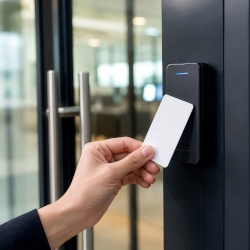
Unauthorized access is a real danger. Typical methods such as tailgating or piggybacking can be prevented by vigilance and clear access rules.

Physical security also includes digital aspects. Never connect USB sticks or devices that are not provided or approved by your organisation. They can introduce malware and put sensitive data at risk.
Situational Awareness
Situational awareness means recognizing suspicious behavior and unusual situations before they turn into security incidents.
This episode of the CyberSecure podcast highlights common warning signs in everyday office life and shows how a security-conscious mindset protects both individuals and the organization.
What is situational awareness?
Situational awareness describes the ability to consciously perceive one’s own environment, to recognize dangers and to react appropriately to them. This is a crucial factor for physical safety in both the private and professional environment.
Examples include:
- When crossing a road, we automatically check the traffic conditions.
- When traveling, we often research potential risks in advance.
This early warning system helps to prevent potential dangers in everyday life as well as in the working environment.
The five phases of situational awareness
- Perception: observe your surroundings carefully (people, doors, ID cards, unusual situations).
- Understand: interpret the signals correctly and recognise warning signs (e.g. “Does this belong here?”).
- Predict: assess how the situation could develop (“What happens if I do nothing?”).
- Decide: choose an appropriate action strategy (intercept, keep your distance, inform security).
- Action: implement your decision consistently (notification, monitoring, documentation).
Tips for further situational awareness in everyday life
If a situation doesn’t feel "right," take that gut feeling seriously – it’s better to create distance and stay alert early than to react too late. A few simple habits can help turn intuition into concrete action, for example:
- On the move in the city: find out about risky events and avoid unsafe places. Don't let your smartphone distract you.
- On public transport: stay alert, leave no bags open, keep an eye on your luggage and change position if necessary (e.g. closer to other people or in the field of vision of staff).
- In the evening / at events: set meeting points beforehand, plan your way home, consume alcohol responsibly, don’t let yourself become distracted (e.g. when typing/making a telephone call).
- At work: pay attention to your workplace surroundings. Don’t leave unknown people unattended in sensitive areas, question unusual behaviour, and protect confidential information from unauthorised access.
- In potentially risky situations: distance yourself early, do not discuss or provoke, opt to avoid and seek help (e.g. passers-by, personnel, emergency services in the case of acute danger).
Unauthorised access: Why protection against unauthorised access is so important
Unauthorised access to company premises is more than just a security risk: it can enable theft, espionage, sabotage, or the targeted preparation of cyberattacks (e.g. by gaining access to workstations, printers, or server rooms). As criminals use increasingly creative methods, technical controls (such as turnstiles or visitor badges) and strong situational awareness are essential. Every employee can help reduce risk in day-to-day work: stay alert, ask politely when something seems off, and report suspicious observations consistently.
Typical methods of intruders
- Tailgating (sneaking in): strangers follow close behind employees to circumvent access controls unnoticed – often with an excuse like "I’ll just come in quickly".
- Appeal for helpfulness: with full hands or a friendly smile, intruders hope that you’ll hold the door open for them (so-called piggybacking).
- To feign authority and urgency: they pose as supposed business contacts, a “courier,” or “external service provider,” claiming time pressure.
- Social engineering: criminals call ahead under a false pretext or pretend to be external service staff (e.g. a “technician”).

Physical security is also digital security
Not only unauthorized people can pose a danger. Even inconspicuous objects such as USB sticks, external hard drives or mobile chargers can carry risks. Cybercriminals can place these devices in buildings or in public spaces in the hope that someone will connect them. Even a short contact is enough to transfer malware to a device or access sensitive data.
Tips for safe handling of data carriers:
- Never connect to unknown devices, whether at work or privately.
- Do not test or plug in unknown USB sticks.
- Protect your own devices – use only approved or your own vetted removable media.
- Stay alert: situational awareness is key. Ask yourself whether a USB stick or cable at your workstation legitimately belongs there.
How to strengthen building security
With clear rules, effective access control, a vigilant environment, and consistent behaviour, you create the foundation for reliable building security:
- Consistent access control: do not allow access to strangers without ID or authorization.
- Challenge suspicious persons: stay aware of who is moving around the building and politely ask for their name and the purpose of visit (e.g. “Can I help you?”).
- Escort visitors: ensure external visitors are not left unattended in sensitive areas.
- Stay alert: report suspicious observations to appropriate authorities immediately. As a rule of thumb it’s better to ask one time too many than one time too few.
Conclusion: Safety begins with attention
Situational awareness is an essential part of your personal and professional safety. If you spot potential risks early, you can act in time and prevent incidents before they happen.
In the workplace, this is especially important for protecting against unauthorised access. Technology and access controls help, but what really matters is consistent employee behaviour in everyday situations: checking badges, not permitting tailgating, escorting visitors, and reporting anything unusual. This way, you protect not only yourself, but also your colleagues, information, and the organisation as a whole.
Frequently asked questions about Situational awareness
Show content of What does situational awareness mean?
Situational awareness means actively perceiving the environment, classifying information and acting correctly at an early stage – before a situation becomes a risk.
Show content of Why is situational awareness so important, especially in companies?
Because many security incidents result from routine errors (holding the door open, unattended visitors). Attention and consistent behavior directly reduce risk.
Show content of What is Unauthorized Access?
Unauthorized access occurs when people enter buildings or sensitive areas without authorization – with risks such as data theft, sabotage or preparation for further attacks.
Show content of What is Tailgating and how should I react?
Tailgating is when someone “slips in” behind an authorized person through a secured door. Your response should be friendly but firm—ask to see their badge/ID and direct them to Reception/Security. Don’t let someone in “just to be polite.”
Show content of Why are found USB sticks a security risk?
USB sticks can introduce malware or manipulate devices. Do not connect unknown devices – instead hand them in/report them, following any internal procedures.
Show content of How can I apply situational awareness?
With simple routines: "Stop–Check–Act", short environmental checks when entering/leaving a location, and conscious challenging of exceptions ("does the rule still apply now?").